
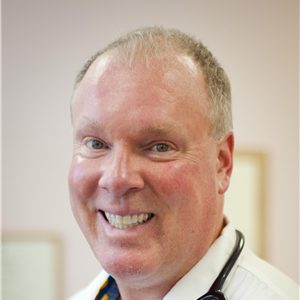
Dr. Steve Margolis shares how he incorporates OWLiver® into patient evaluation at both the Cholesterol Treatment Center and Complete Family Care in Sterling Heights, Michigan.
For Dr. Steve Margolis, evaluating liver health is a practical part of caring for patients with lipid disorders and other metabolic concerns. A board-certified family physician and clinical lipidologist, he sees patients whose cholesterol and triglyceride issues often accompany questions about fatty liver disease.
That overlap initially drew him to OWLiver, a non-invasive blood test that uses metabolomics to assess metabolic dysfunction-associated steatotic liver disease (MASLD). The test analyzes 28 metabolic biomarkers associated with liver fat, inflammation and fibrosis.
“A lot of my dyslipidemic patients have fatty liver, unfortunately,” says Dr. Margolis, Medical Director at both the Cholesterol Treatment Center and Complete Family Care.
Identifying patients who may benefit from liver assessment
In Dr. Margolis’s practice, the decision to evaluate liver health extends beyond lipid disorders. He also considers patients of Hispanic origin, insulin resistance, metabolic syndrome, diabetes and hypertension. Elevated liver enzymes or fat identified on an ultrasound can prompt further evaluation.
For patients who already know something may be wrong, he finds that additional testing can help move the conversation forward. Patients with elevated liver enzymes, for example, often want to understand what is causing the change.
A blood-based assessment also has practical appeal. Dr. Margolis notes that access to FibroScan can be challenging even in the suburbs of Detroit, where he practices, and that patients appreciate a non-invasive option.
Using OWLiver to inform clinical next steps
OWLiver provides Dr. Margolis with valuable information to guide further evaluation and patient conversations. He incorporates the findings into the broader clinical picture to help determine appropriate next steps.
“It’s a great test,” he says, while emphasizing thoughtful interpretation with any non-invasive assessment.
When he wants to confirm a positive finding or clarify an unexpected result, he may order an Enhanced Liver Fibrosis (ELF) blood test or seek additional assessment with FibroScan. This complementary approach allows him to build on the information OWLiver provides and make informed, individualized care decisions.
Connecting findings to individualized care
Explaining results of an OWLiver test is an important part of Dr. Margolis’s approach. When findings are reassuring, he discusses them with the patient. When results raise concerns, he explains the need for confirmatory testing and what the next steps may involve.
Once the findings are clarified, the conversation turns to an individualized care plan informed by disease severity and the patient’s overall metabolic health.
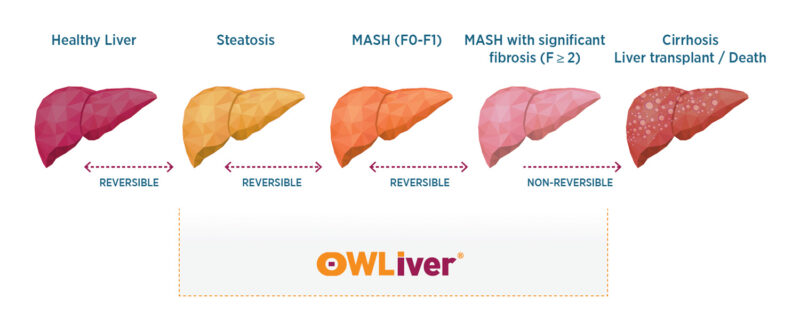
For patients with MASH and significant fibrosis, Dr. Margolis considers prescription treatment. He points to Rezdiffra® (resmetirom) and Wegovy® (semaglutide injection), which are approved alongside diet and exercise for adults with noncirrhotic MASH and moderate to advanced fibrosis, consistent with stages F2–F3.1, 2
For patients with no or mild fibrosis (F0–F1), he emphasizes managing metabolic risk factors, improving diet, increasing physical activity and making sustainable lifestyle changes.
“We work on their risk factors, diet, exercise, lifestyle,” he explains.
For patients with simple steatosis, he emphasizes a Mediterranean-style diet and weight management. In the interview, he notes that losing approximately 7% of body weight can help patients make meaningful improvements.
Throughout these conversations, his goal is to help patients understand how liver health connects with their broader metabolic health, and how the findings can inform practical next steps.
Making liver health part of primary care
Dr. Margolis believes primary care clinicians have an important opportunity to recognize patients who may need liver assessment. In his experience, awareness of MASLD and metabolic dysfunction-associated steatohepatitis (MASH) has not kept pace with the need to evaluate patients.
“I think that this is underappreciated, under-tested, and underdiagnosed in primary care,” he says.
His experience with OWLiver illustrates how a non-invasive assessment can fit into those everyday clinical conversations: identifying a concern, interpreting findings alongside other information, and determining appropriate next steps with the patient.
Learn more about OWLiver and its role in non-invasive liver disease assessment.
1 Madrigal Pharmaceuticals, Inc. Rezdiffra® (resmetirom) tablets: Prescribing information. Revised July 2026. Section 1: Indications and Usage. Available through DailyMed.
2 Novo Nordisk Inc. Wegovy® (semaglutide): Prescribing information. Revised June 2026. Section 1: Indications and Usage—Wegovy injection. Available through DailyMed.