
Recorded diagnoses of fatty liver or metabolic dysfunction-associated steatotic liver disease (MASLD) have risen sharply. In a UK primary care study, recorded prevalence increased from 0.52% in 2012 to 2.42% in 2022.1 Yet the researchers noted a substantial gap between recorded diagnoses and estimates of how common MASLD is in the broader population.
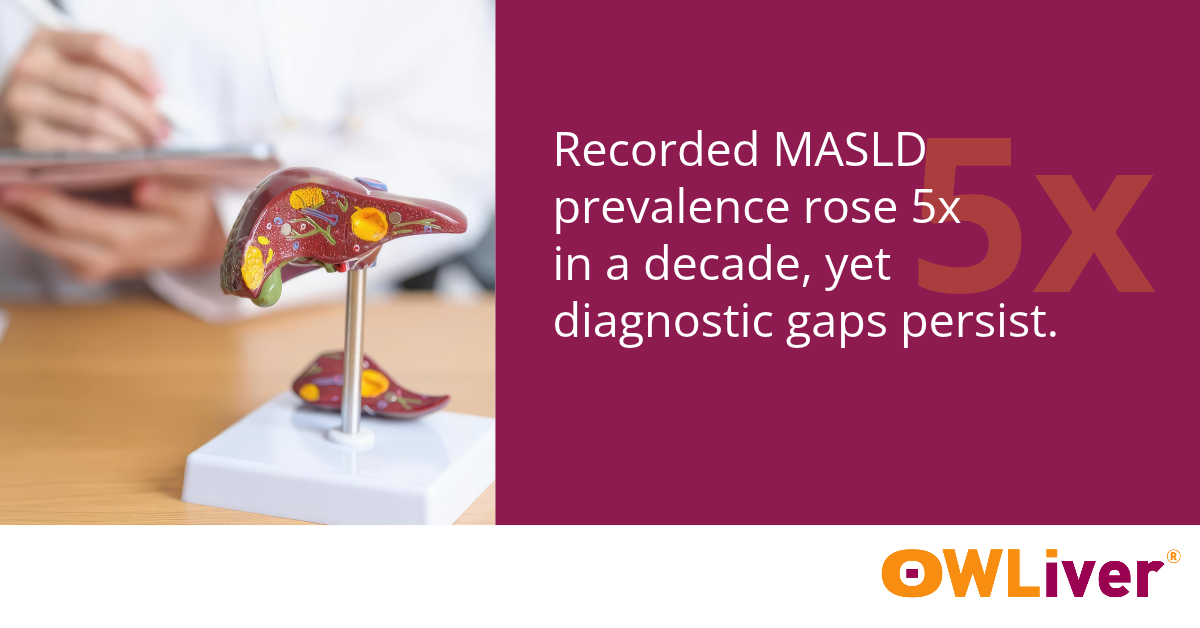
The difference between recorded and actual prevalence is important. MASLD is estimated to affect approximately 25% of people in Western Europe, yet just 2.42% had a diagnosis documented in this primary care dataset. That suggests a substantial diagnostic gap remains. Additionally, the study found that people with a recorded MASLD diagnosis were more likely than matched controls to have type 2 diabetes or hypertension. These overlapping metabolic risks give clinicians opportunities to consider liver health before symptoms appear.
The opportunity is to identify liver disease while there is still time to act. MASLD can progress silently from liver fat to inflammation and fibrosis, so waiting for signs of advanced disease may mean missing earlier opportunities to intervene. OWLiver helps clinicians assess patients across treatable stages of fatty liver with a noninvasive blood test, providing a fuller picture of liver health to inform earlier care decisions.
The lesson from this study is clear: recording more MASLD diagnoses matters, but patients also need a reliable route from detection to treatment. Seeing more of the liver health story can help clinicians make more informed decisions about what comes next.
1Reference: Huang H-T, Hewitt M, Li W, et al. The Lancet Regional Health – Europe. 2026;68:101808. https://www.thelancet.com/journals/lanepe/article/PIIS2666-7762(26)00220-6/fulltext